
Would you like to switch to the accessible version of this site?

Go to accessible site Close modal window

Don't need the accessible version of this site?

Hide the accessibility button Close modal window
Accessibility View Close toolbar
Edisto Pet Clinic

1309 Springdale Dr

Orangeburg, SC 29115 US

803-533-0153

Open mobile navigation
  • Home
  • New Patient Center
    • Online Forms
    • What to Expect
    • Virtual Office Tour
    • Veterinary Resources
    • Payment Options
  • About Us
    • Services
    • Meet Our Team
  • Clinic Hours
  • Online Resources
  • Contact Us
  • Blog
  • Veterinary Topics
    • Pet Health
      • Chronic Conditions
      • Digestive and Oral Health
      • Diseases and Viruses
      • Pests and Parasites
      • Orthopedics
    • Today's Veterinarian
    • Choosing Your Pet
      • Finding Your Pet
      • Cats
      • Dogs
      • Exotics
        • Amphibians
        • Birds
        • Reptiles
          • Lizards
          • Turtles
      • Small Mammals
        • Ferrets
        • Rabbits
        • Domesticated Animals
          • Prairie Dogs
        • Pocket Pets
          • Chinchillas
          • Guinea Pigs
          • Hamsters
          • Hedgehogs
          • Rats
      • Livestock
        • Cows
        • Donkeys, Horses & Mules
        • Goats
        • Pigs
        • Poultry
        • Sheep
    • Living With Your Pet
      • Bringing Your Pet Home
      • Children and Pets
      • Providing Care
      • Travel
      • Saying Goodbye
    • Newsletter Library
      • Cats
      • Tips for Pet Owners
      • Behavior & Training
      • Fleas & Parasites
      • Keeping Pets Healthy
      • Recognizing Illness
      • Nutrition & Food
      • Pet Dangers
      • Seasonal Topics
      • Visiting the Vet
      • Equine
      • Newsletter Archive
        • Fun with Pets
        • Unbelievable Pets
    • Video Newsroom
      • Health Topics
      • Technology and Science
      • Other Interests
    • Newsletter Library
    • Client Survey
    • Pets4Kids
  • Online Pharmacy
  • Home >
  • Articles >
  • Newsletter Library >
  • May Newsletter: How to Keep Your Cat at a Healthy Weight

May Newsletter: How to Keep Your Cat at a Healthy Weight

  • Created in Newsletter Library

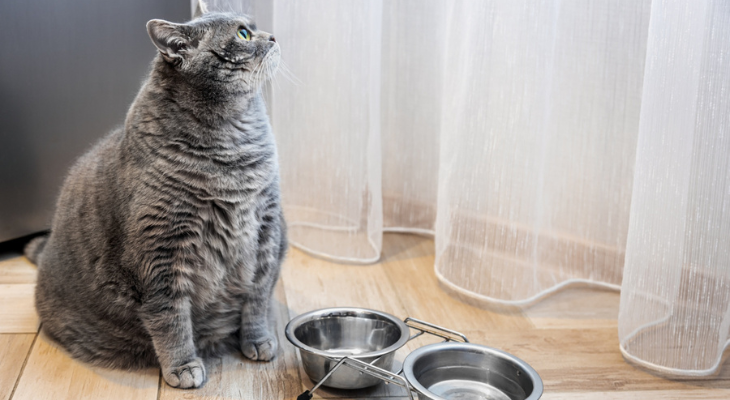
Fat cat demands tribute.

How to Keep Your Cat at a Healthy Weight

Overweight or obese cats are at risk for a variety of health problems that could end their lives prematurely. Gaining even a few pounds could increase your pet's chances of developing conditions ranging from arthritis to heart disease and diabetes. Following these tips will help your furry friend maintain a healthy weight.

Start with a Visit to the Veterinarian

Since some health problems can cause weight gain or loss in cats, it's a good idea to schedule an appointment with your pet's veterinarian if you're concerned about your favorite feline's weight. Your pet's veterinarian will check your pet for diseases or conditions that could make your pet too thin or too heavy.

For example, hypothyroidism (underactive thyroid) can cause your pet to gain weight while hyperthyroidism (overactive thyroid) often leads to weight loss. An increase or decrease in weight could also be due to intestinal parasites or a tumor. Although weight gain is often due to simply eating too much, it's important to rule out health causes if your cat has gained a few pounds.

The average weight for a healthy cat varies from 7 to 12 pounds, according to Cummings Veterinary Medical Center at Tufts University. While a cat with a large frame could be perfectly healthy at 13 pounds, the same weight could cause problems for a pet with a smaller frame.

Read the Labels on Cat Food

Cat food is formulated to meet your pet's nutritional needs at every stage in its life. Unfortunately, the high-calorie food your cat ate as a kitten could cause weight gain once your pet becomes an adult. The same thing can happen if you feed your senior cat food intended for adult cats. Reading age recommendations on pet food labels will help you ensure that the food is the best choice for your pet.

It's also important to look at the ingredients on the label. The healthiest foods list a protein source, like chicken, beef, liver, or fish among the first four or five ingredients. Lower-quality foods usually rely heavily on fillers, like ground corn, beet pulp, or poultry-byproduct meal, and may contain lower amounts of meat or other protein sources. Although your pet may like the taste of these foods, eating them every day could lead to weight gain.

Overweight cats are at increased risk for several diseases, including:

  • Diabetes
  • Cancer
  • Skin Conditions
  • Arthritis
  • Heart Disease
  • High Blood Pressure
  • Kidney Disease
  • Urinary Tract Issues

Make Portion Control a Priority

Do you throw handfuls of dry food in your pet's dish throughout the day or serve an entire can of wet food at mealtime? You may be feeding your pet more than the recommended portion. Check the feeding recommendations on the back of the box or can to determine just how much your pet should eat.

Use a measuring cup rather than relying on estimates when dishing out your pet's food. Keep in mind that kittens need to be fed two to three times per day, while older cats are usually fed one to two times per day.

Treats count toward your pet's daily caloric intake, too. According to Petfinder, cats should eat no more than 30 calories a day in treats. If you need to reduce your cat's treat or food intake, don't forget to let your entire family know. When everyone understands how much your pet should eat, it's much easier to maintain its weight.

Schedule Kitty Playtime

Just like people, cats that are active are less likely to be overweight. Take advantage of your pet's natural drives with games and activities that involve chasing an object. Move a laser pointer over the floor, dangle a toy from a kitty fishing rod, or play fetch or hide and seek with your cat.

Your furry friend may also enjoy chasing a battery-operated mouse or batting at a spinning toy purchased from a pet supply company. Manufacturers offer plenty of intriguing toys for cats, although homemade toys and games are just as good as expensive products if they keep your pet active and engaged.

Are you concerned about your pet's weight? Contact our office to schedule a visit for your furry friend.

Sources:

Cummings Veterinary Medical Center at Tufts University: Think You Have a Fat Cat? The Ten Things You Need to Know, 5/17/2016

https://vetnutrition.tufts.edu/2016/05/think-you-have-a-fat-cat-the-ten-things-you-need-to-know/

Petfinder: Calories in Pet Treats

https://www.petfinder.com/cats-and-kittens/feeding/food-and-treats/cat-treats-calorie-count/

PetMD: What Is the Weight of an Average Cat, and When Is My Kitty Obese?, 2/9/2023

https://www.petmd.com/cat/general-health/average-weight-cats

Cornell Feline Health Center: How Often Should You Feed Your Cat?

https://www.vet.cornell.edu/departments-centers-and-institutes/cornell-feline-health-center/health-information/feline-health-topics/how-often-should-you-feed-your-cat

  • Pet Health
    • Chronic Conditions
    • Digestive and Oral Health
    • Diseases and Viruses
    • Pests and Parasites
    • Orthopedics
  • Today's Veterinarian
  • Choosing Your Pet
    • Finding Your Pet
    • Cats
    • Dogs
    • Exotics
      • Amphibians
      • Birds
      • Reptiles
        • Lizards
        • Turtles
    • Small Mammals
      • Ferrets
      • Rabbits
      • Domesticated Animals
        • Prairie Dogs
      • Pocket Pets
        • Chinchillas
        • Guinea Pigs
        • Hamsters
        • Hedgehogs
        • Rats
    • Livestock
      • Cows
      • Donkeys, Horses & Mules
      • Goats
      • Pigs
      • Poultry
      • Sheep
  • Living With Your Pet
    • Bringing Your Pet Home
    • Children and Pets
    • Providing Care
    • Travel
    • Saying Goodbye
  • Newsletter Library
    • Cats
    • Tips for Pet Owners
    • Behavior & Training
    • Fleas & Parasites
    • Keeping Pets Healthy
    • Recognizing Illness
    • Nutrition & Food
    • Pet Dangers
    • Seasonal Topics
    • Visiting the Vet
    • Equine
    • Newsletter Archive
      • Fun with Pets
      • Unbelievable Pets
  • Video Newsroom
    • Health Topics
    • Technology and Science
    • Other Interests
  • Newsletter Library
  • Client Survey
  • Pets4Kids

Featured Links

Click to find out more

  • Services

    We strive to provide complete care for our patients. Learn more about all the services we provide.
  • Make An Appointment

    We will do our best to accommodate your busy schedule. Schedule an appointment today!
  • Online Forms

    Our patient forms are available online so they can be completed in the convenience of your own home or office.

Office Hours

Our Regular Schedule

Monday:

8:00 am

5:00 pm

Tuesday:

8:00 am

5:00 pm

Wednesday:

9:00 am

12:00 pm

Thursday:

8:00 am

5:00 pm

Friday:

8:00 am

5:00 pm

Saturday:

Closed

Sunday:

Closed

Location

Find us on the map

Testimonial

Read What Our Clients Say

  • "Testimonial Coming Soon..."

Featured Articles

Read about interesting topics

  • March Newsletter: How to Keep Your Cat Safe When Outdoors

    Wondering how your cat can safely spend time outdoors? ...

    Read More
  • March Newsletter: How to Choose Safe Blankets for Pets

    Do you know how to pick a safe blanket for your pet? ...

    Read More
  • February Newsletter: How to Reduce Dental Anxiety in Pets

    Does your pet hate toothbrushing? These tips could reduce dental anxiety. ...

    Read More
  • February Newsletter: How to Safely Change Your Cat’s Food

    Buying a new food for your cat? Find out how to switch foods safely. ...

    Read More
  • January Newsletter: Signs Your Pet Needs a Wellness Exam

    Does your pet need a wellness exam? ...

    Read More
  • January Newsletter: How Your Veterinarian Can Help If Your Pet Ingests Something Toxic

    Has your pet eaten something it shouldn't have? Find out how your vet can help. ...

    Read More
  • December Newsletter: Signs Your Pet Needs a Professional Cleaning

    Do you know when your pet needs a professional cleaning? ...

    Read More
  • December Newsletter: Simple Ways to Keep Your Home Flea-Free for Your Pet’s Well-being

    Never want to see another flea again? Try these tips for a flea-free home. ...

    Read More
  • November Newsletter: The Importance of Bloodwork for Your Pet’s Health

    Wondering if your pet really needs bloodwork? Find out the benefits of blood tests for your furry friend. ...

    Read More
  • November Newsletter: Turkey Day Tips for Pet Owners

    Don't forget about your pet when making Turkey Day preparations. ...

    Read More

NEWSLETTER SIGNUP

Sign up for more articles

Connect With Us

  • Copyright © 2026 MH Sub I, LLC dba iMatrix.
  • Admin Log In
  • Site Map